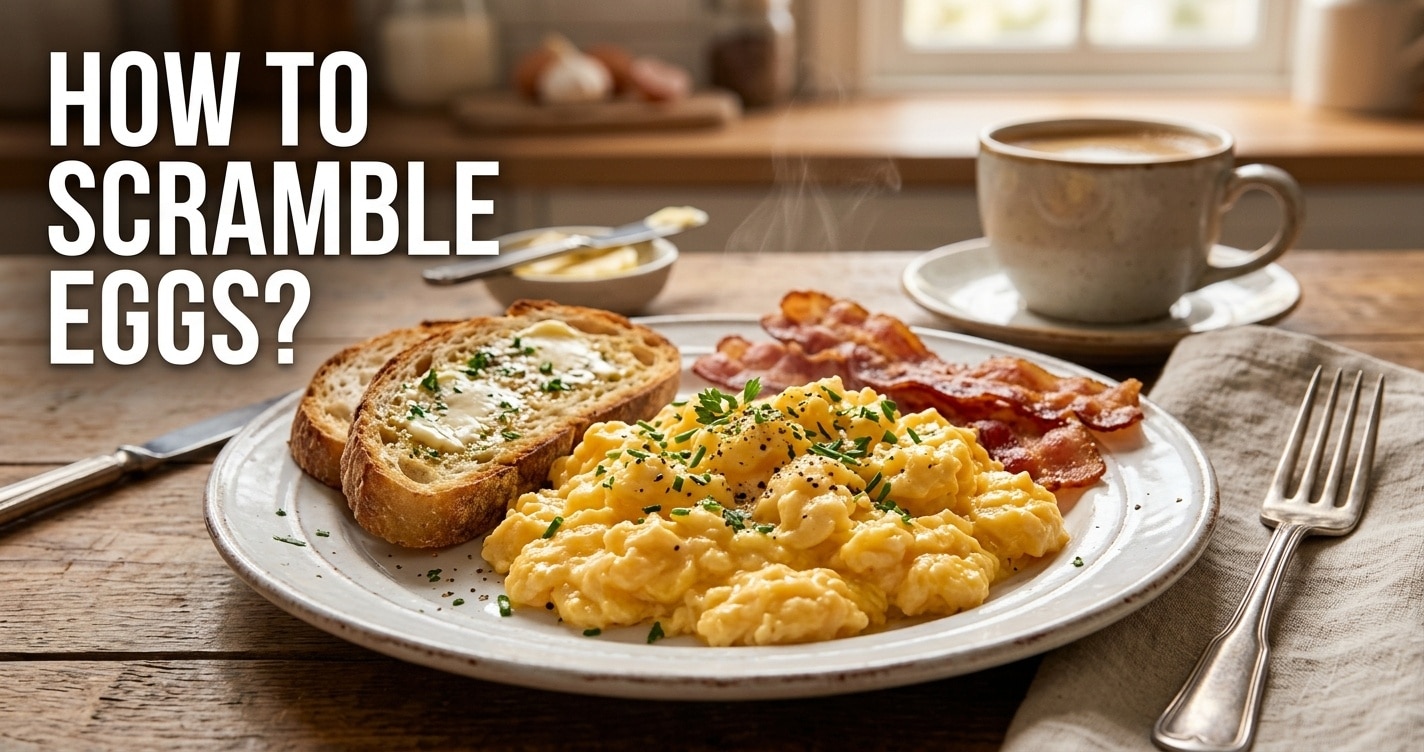
How to scramble eggs requires beating eggs, cooking them over low-medium heat with butter, and stirring constantly until soft curds form. The secret is not rushing — high heat creates tough, watery eggs. How to scramble eggs properly takes 5-7 minutes from pan to plate. The key is removing eggs from heat while still slightly undercooked because they continue cooking from residual heat. How to scramble eggs successfully means understanding that gentle, patient cooking creates that luxurious creamy texture everyone loves.
Ingredients for Perfect Scrambled Eggs (Serves 2)
Essential Ingredients
- 4 large eggs, room temperature
- 2 tablespoons butter
- Salt to taste
- Black pepper to taste
Optional Additions
- 2 tablespoons heavy cream or milk
- 1 tablespoon fresh herbs (chives, parsley, dill)
- ¼ cup shredded cheese (cheddar, feta, gouda)
- 2 tablespoons diced ham or cooked bacon
- 2 tablespoons diced tomatoes
- 2 tablespoons sautéed mushrooms
Step-by-Step Guide: How to Scramble Eggs
Step 1: Prepare Eggs
- Crack 4 large eggs into mixing bowl
- Add pinch of salt and black pepper
- Optional: add 2 tablespoons cream or milk for creaminess
- Beat with fork or whisk for 30-45 seconds
- Eggs should be uniformly yellow, well combined
- Don’t overmix — just combine thoroughly
Step 2: Heat Pan
- Use non-stick pan or well-buttered skillet
- Medium or medium-low heat (this is crucial!)
- Add 2 tablespoons butter
- Wait for butter to melt completely
- Swirl pan so butter coats entire bottom
- Butter should foam gently — not brown or sizzle aggressively
Step 3: Pour Eggs
- Once butter is foamy, pour beaten eggs into center
- Don’t stir immediately
- Let sit for 10-15 seconds for slight setting
Step 4: Gentle Stirring (Key Technique)
- Using spatula, push eggs from edges toward center slowly
- Keep pushing and folding continuously
- Don’t aggressively stir — gentle, slow movements
- Scrape bottom and sides every 20-30 seconds
- Dough-like curds should form gradually
- Cook for 5-7 minutes total
Step 5: Watch for Doneness
- Eggs will gradually transform from liquid to creamy
- Stop cooking when eggs still look slightly wet and glossy
- They’re not quite done yet — residual heat will finish them
- This is the key to fluffy, creamy texture!
Step 6: Remove from Heat
- Transfer eggs to plate immediately
- Don’t wait in pan — residual heat continues cooking
- Carry-over cooking gives perfect creamy texture
- Eggs will look slightly undercooked but taste perfect
Step 7: Add Optional Ingredients
- Top with fresh herbs if desired
- Add cheese, bacon, or vegetables
- Season with more salt and pepper to taste
- Toss gently to combine
Step 8: Serve
- Serve immediately while warm
- Serve hot — tastes best at proper temperature
- Pair with toast, bacon, hash browns
- Eat right away for best texture
Total Time: 10-12 minutes
FAQ — How to Scramble Eggs
Q1: Why are scrambled eggs tough and watery?
Heat too high or cooked too long. How to scramble eggs requires low-medium heat and stopping while slightly undercooked. Remove from heat when still creamy — residual heat finishes them.
Q2: What heat should you use?
Use medium or medium-low heat — absolutely crucial. High heat creates tough, rubbery eggs. Low heat takes longer but produces creamy, tender texture. Patience wins.
Q3: Should you add cream or milk?
Optional but recommended. How to scramble eggs with 2 tablespoons cream or milk adds richness and helps create creamy texture. Not essential but improves results.
Q4: Can you add cheese?
Absolutely! How to scramble eggs with cheese works great. Add ¼ cup shredded cheese in last minute of cooking. Cheese melts into eggs, adding flavor and creaminess.
Q5: Why should you remove eggs while still wet?
How to scramble eggs properly means removing while slightly undercooked. Residual heat from pan continues cooking eggs for perfect creamy texture. Overcooked = dry, tough eggs.
Q6: Can you make scrambled eggs in advance?
Not really. How to scramble eggs is best made fresh right before eating. Can make 5-10 minutes ahead but texture deteriorates. Better to cook fresh each time.
Q7: How much butter do you really need?
Use 1-2 tablespoons butter per 4 eggs. How to scramble eggs without enough butter creates dry texture. Butter is essential for creaminess and flavor — don’t skimp.
Pro Tips
✅ Low heat is everything — most important factor
✅ Room temperature eggs — cook more evenly
✅ Constant gentle stirring — creates soft curds
✅ Remove while creamy — don’t wait for completely set
✅ Use plenty of butter — essential for richness
✅ Add cream or milk — improves creaminess
✅ Don’t overstir — breaks curds into tiny pieces
✅ Serve immediately — best when hot and creamy
✅ Fresh herbs — add flavor and visual appeal
✅ Quality butter — tastes noticeably better
Common Mistakes to Avoid
❌ High heat — creates tough, watery eggs
❌ Not stirring enough — creates irregular texture
❌ Stirring too much — breaks curds into tiny pieces
❌ Overcooking — removes moisture, creates dryness
❌ Not using butter — results in bland, dry eggs
❌ Cold ingredients — don’t cook evenly
❌ Overseasoning — hard to adjust after cooking
❌ Serving cold — tastes best when hot
Flavor Combinations
Classic Cheese & Herb
- Cheddar cheese, fresh chives
- Simple, always good
Smoked Salmon & Dill
- Diced smoked salmon, fresh dill
- Elegant and sophisticated
Bacon & Tomato
- Crumbled bacon, diced tomatoes
- Hearty, satisfying
Mushroom & Thyme
- Sautéed mushrooms, fresh thyme
- Earthy, rich flavor
Spinach & Feta
- Wilted spinach, crumbled feta
- Greek-inspired, nutritious
Peppers & Onions
- Diced bell peppers and onions
- Colorful, veggie-forward
Conclusion
How to scramble eggs is simple when you remember low heat, constant stirring, and removing while still creamy. This fundamental cooking skill transforms your breakfast completely. Once you master the technique, perfectly fluffy scrambled eggs become your go-to breakfast that’s delicious, fast, and incredibly satisfying.