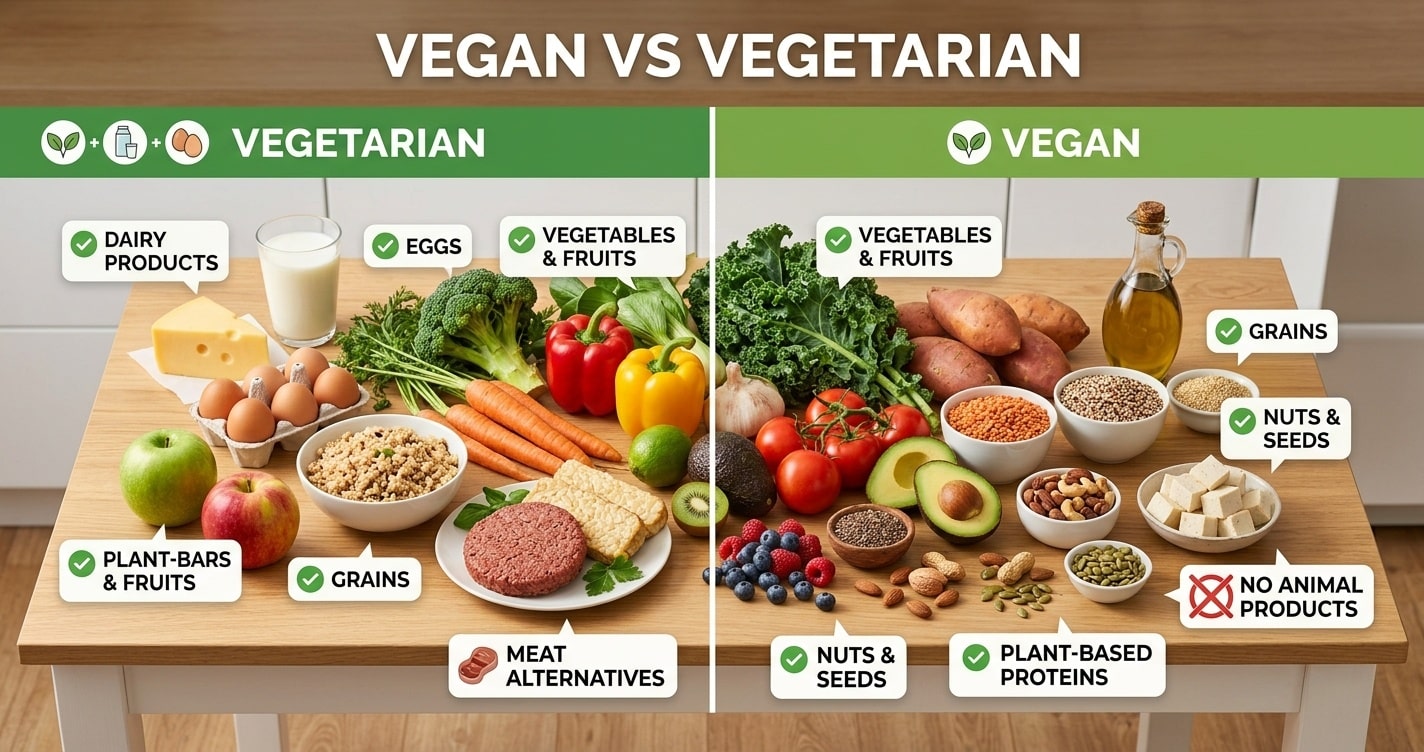
What’s the difference between vegan and vegetarian is that vegetarians don’t eat meat but do eat dairy and eggs, while vegans avoid ALL animal products including dairy, eggs, honey, and anything derived from animals. Vegetarianism focuses on excluding meat (flesh), while veganism extends beyond diet to exclude all animal exploitation. What’s the difference between vegan and vegetarian also includes lifestyle choices — vegans typically avoid leather, fur, and animal-tested products. Both groups have similar motivations (ethical, environmental, health) but different levels of commitment. What’s the difference between vegan and vegetarian represents a spectrum of dietary and ethical choices.
Side-by-Side Comparison
| Food/Product | Vegetarian | Vegan |
|---|---|---|
| Meat/Fish | ❌ NO | ❌ NO |
| Poultry | ❌ NO | ❌ NO |
| Dairy (Milk, Cheese, Yogurt) | ✅ YES | ❌ NO |
| Eggs | ✅ YES | ❌ NO |
| Honey | ✅ YES | ❌ NO |
| Leather Products | ✅ YES | ❌ NO |
| Wool/Silk | ✅ YES | ❌ NO |
| Animal-Tested Products | ✅ YES | ❌ NO |
| Vegetables | ✅ YES | ✅ YES |
| Fruits | ✅ YES | ✅ YES |
| Grains/Beans | ✅ YES | ✅ YES |
| Nuts/Seeds | ✅ YES | ✅ YES |
Types of Vegetarians
Lacto-Ovo Vegetarian (Most Common)
- Eat: Dairy products AND eggs
- Avoid: All meat, poultry, fish
- Most flexible vegetarian option
Lacto Vegetarian
- Eat: Dairy products only
- Avoid: Eggs, meat, poultry, fish
- Common in some cultures
Ovo Vegetarian
- Eat: Eggs only
- Avoid: Dairy, meat, poultry, fish
- Less common
Flexitarian (Semi-Vegetarian)
- Mostly vegetarian but eat meat occasionally
- Not strict vegetarians
- Growing trend for environmental reasons
Types of Vegans
Ethical Vegan
- Motivated by animal welfare
- Avoid all animal products
- Often extend to lifestyle (leather, fur, cosmetics)
Environmental Vegan
- Motivated by environmental impact
- Avoid animal products for sustainability
- Concerned about climate change
Health Vegan
- Motivated by personal health
- Avoid animal products for wellness
- May use some animal products (like leather)
Dietary Vegan
- Focus only on diet
- Avoid all animal foods
- May use animal products in other areas
Key Differences Explained
Diet Restrictions
Vegetarian:
- ❌ NO: Meat, poultry, fish, seafood
- ✅ YES: Dairy, eggs, honey, plant foods
Vegan:
- ❌ NO: All animal products (meat, dairy, eggs, honey)
- ✅ YES: Only plant-based foods
Lifestyle & Ethics
Vegetarian:
- Focus primarily on diet
- May wear leather, silk, wool
- May use animal-tested cosmetics
- Main concern: not eating meat
Vegan:
- Extend beyond diet to lifestyle
- Avoid leather, fur, wool
- Avoid animal-tested products
- Main concern: avoiding animal exploitation completely
Motivation Reasons
Vegetarian Reasons:
- Animal welfare (don’t want animals killed for food)
- Religious beliefs
- Environmental concerns
- Health benefits
- Cultural traditions
Vegan Reasons:
- Animal rights/liberation (avoid all exploitation)
- Environmental impact (livestock farming impact)
- Health benefits
- Ethical consistency (don’t use any animal products)
- Moral opposition to animal suffering
FAQ — What’s the Difference Between Vegan and Vegetarian
Q1: Can vegetarians eat cheese and milk?
Yes! What’s the difference between vegan and vegetarian is that vegetarians eat dairy products (cheese, milk, yogurt, butter). Vegans avoid ALL dairy. This is a major distinction.
Q2: Can vegans eat honey?
No. What’s the difference between vegan and vegetarian includes honey — vegetarians eat it, vegans avoid it. Vegans consider honey animal exploitation since it comes from bees.
Q3: Can vegetarians eat eggs?
Most vegetarians (lacto-ovo) can eat eggs. What’s the difference between vegan and vegetarian regarding eggs — vegetarians eat them, vegans don’t. Some vegetarians (lacto vegetarians) don’t eat eggs though.
Q4: Do vegans wear leather?
No. What’s the difference between vegan and vegetarian extends to lifestyle — vegans avoid leather, fur, wool. Vegetarians might wear these products. Veganism is comprehensive.
Q5: Why do vegans avoid honey if it doesn’t kill bees?
What’s the difference between vegan and vegetarian philosophy — vegans believe honey harvesting exploits bees and takes their food source. Ethical stance against any animal exploitation.
Q6: Is vegan healthier than vegetarian?
Both can be healthy. What’s the difference between vegan and vegetarian health-wise depends on what you eat, not the label. Both require proper nutrition planning.
Q7: Are all vegans ethical, or can you be vegan just for health?
Both exist! What’s the difference between vegan and vegetarian motivations vary — some vegans are purely health-focused, others ethical. The diet is the same regardless of motivation.
What Each Group Eats
Vegetarians Can Eat
- All vegetables and fruits
- All grains and legumes
- Nuts and seeds
- Dairy products (milk, cheese, yogurt, butter)
- Eggs
- Honey
- Plant-based meat alternatives
- Most processed foods (if no meat)
Vegetarians Cannot Eat
- Beef, pork, lamb
- Poultry (chicken, turkey, duck)
- Fish and seafood
- Any meat-based products
- Gelatin from animals
Vegans Can Eat
- All vegetables and fruits
- All grains and legumes
- Nuts and seeds
- Plant-based meat alternatives
- Vegan cheese and milk (almond, oat, soy milk)
- Nutritional yeast
- Coconut oil, olive oil
- Vegan baked goods and desserts
Vegans Cannot Eat
- All meat (beef, pork, poultry, fish)
- Dairy products (milk, cheese, yogurt, butter)
- Eggs
- Honey
- Anything containing animal products
- Many processed foods with hidden animal ingredients
Percentage of Population
United States (Approximate):
- Vegetarians: 3-6% of population
- Vegans: 1-2% of population
- Growing trend, especially among younger generations
Globally:
- Varies significantly by country
- Higher in India (30-40%)
- Lower in Western countries (3-10%)
Nutritional Considerations
Vegetarian Diet
- Generally adequate protein from eggs and dairy
- B12 available from dairy and eggs
- Iron, zinc, omega-3s need attention
- Generally easier to meet nutritional needs
Vegan Diet
- Requires protein planning (beans, tofu, nuts, seeds)
- B12 must come from fortified foods or supplements
- Iron, zinc, omega-3s, calcium need careful planning
- Requires more nutritional awareness
Conclusion
What’s the difference between vegan and vegetarian is significant — vegetarians avoid meat but eat animal products like dairy and eggs, while vegans avoid all animal products and often extend this philosophy to lifestyle choices. Both are valid dietary and ethical choices. Understanding these differences helps you respect and accommodate different dietary preferences when cooking or dining with others.