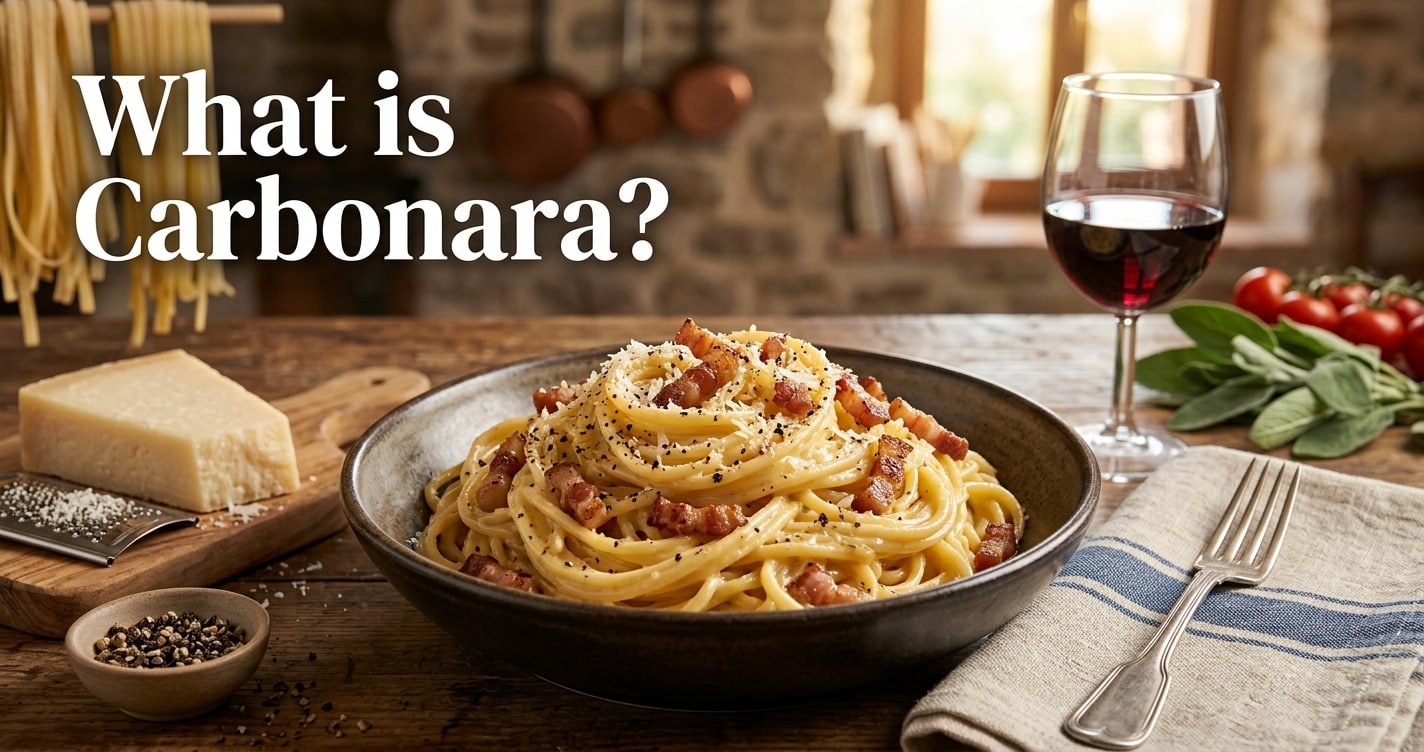
What is carbonara is a traditional Italian pasta dish made with eggs, cheese, guanciale (cured pork), and black pepper creating a creamy sauce without cream. The heat from hot pasta cooks the eggs into silky sauce. What is carbonara traditionally uses spaghetti or tonnarelli pasta with Pecorino Romano cheese and guanciale from Rome. The dish originated in Rome and remains a staple of Roman cuisine. What is carbonara is simple but requires understanding proper technique to achieve authentic results that restaurants serve.
Etymology & History
What Does “Carbonara” Mean?
Carbonara comes from Italian word “carbone” meaning coal. The name likely refers to:
- Black pepper resembling coal dust
- Charcoal workers (“carbonari”) who created the dish
- Dark specks throughout the dish
Origins & History
- Created: Post-World War II Rome (1944-1950)
- Region: Rome, Lazio region of Italy
- Traditional: Part of Roman “cucina romana” (Roman cuisine)
- Ingredients: Originally used local Roman ingredients
- Evolution: Became famous throughout Italy and world
Authentic Carbonara Ingredients
Must-Have Ingredients (Traditional)
Pasta:
- Spaghetti or tonnarelli (square spaghetti)
- 1 lb for 4 servings
Protein:
- 6 oz guanciale (cured pork jowl – authentic)
- Alternative: Pancetta or bacon (if guanciale unavailable)
Cheese:
- 2 oz Pecorino Romano cheese (traditional)
- Alternative: Parmigiano-Reggiano (some use blend)
Eggs:
- 4 egg yolks (or 3 whole eggs)
- Room temperature eggs
Seasoning:
- Fresh black pepper (generous amount)
- Salt for pasta water only
What NOT to Use
❌ No cream — traditional carbonara never includes cream
❌ No garlic — authentic recipe excludes garlic
❌ No onions — not traditional
❌ No mushrooms — not authentic
❌ No vegetables — pure and simple
❌ No chicken — only guanciale/pancetta
❌ No ham — must be cured pork jowl or pancetta
Step-by-Step Guide: How to Make Carbonara
Step 1: Prepare the Guanciale
- Cut 6 oz guanciale into small cubes or thin strips
- Don’t chop too finely — pieces should be substantial
- Heat skillet over medium heat (no oil needed)
- Cook until fat renders and edges crisp (8-10 minutes)
- Remove with slotted spoon, keep fat in pan
Step 2: Prepare Egg Mixture
- Separate 4 egg yolks into bowl
- Add 2 oz grated Pecorino Romano cheese
- Add 1 teaspoon fresh cracked black pepper
- Whisk together until smooth and pale
- Let sit at room temperature
Step 3: Cook the Pasta
- Bring large pot of salted water to boil
- Water should taste like sea water (salty!)
- Add 1 lb spaghetti or tonnarelli
- Cook until al dente (tender but firm)
- Pasta should be slightly undercooked — it cooks more later
- Reserve 1-2 cups pasta water before draining
- Drain pasta but don’t rinse
Step 4: Combine Pasta with Guanciale
- Add hot drained pasta to skillet with rendered fat
- Toss to coat pasta evenly with fat
- Should sizzle — don’t reduce heat yet
- Add cooked guanciale back to pasta
- Mix well, coating pasta
Step 5: Create the Sauce (Critical Step!)
- Remove skillet from heat completely!
- This prevents eggs from scrambling into chunks
- Wait 30 seconds for pan to cool slightly
- Slowly pour egg mixture over hot pasta
- Toss constantly and vigorously with tongs or fork
- Eggs cook from residual heat into creamy sauce
- Keep tossing for 1-2 minutes
Step 6: Adjust Consistency
- Sauce should be creamy and coat pasta
- If too thick, add pasta water 2-3 tablespoons at a time
- Toss well after each addition
- Consistency should be like heavy cream
- Add more reserved pasta water if needed
Step 7: Final Seasoning
- Taste and adjust pepper (more is better!)
- Add salt if needed (usually minimal — guanciale is salty)
- Add more cheese if desired
- Black pepper should be prominent
Step 8: Serve Immediately
- Divide into warm bowls quickly
- Serve immediately while hot and creamy
- Drizzle with more Pecorino Romano
- Crack fresh black pepper over top
- Serve with extra cheese on side
Total Time: 20-25 minutes
FAQ — What is Carbonara
Q1: Why does carbonara have no cream?
What is carbonara traditionally uses only eggs and cheese for creamy texture. The heat from hot pasta cooks eggs into silky sauce. Cream is modern addition not found in authentic Roman version.
Q2: What is guanciale and where to buy it?
What is carbonara needs guanciale — cured pork jowl with rich flavor. Buy at Italian delis, specialty stores, or online. If unavailable, pancetta is best substitute.
Q3: Can you use bacon instead of guanciale?
Technically yes, but what is carbonara authentically must use guanciale or pancetta. Bacon is different taste and texture. Guanciale has much higher fat content creating proper sauce.
Q4: Why shouldn’t you use cream?
What is carbonara doesn’t need cream because eggs create creamy sauce on their own. Cream makes sauce heavy and muddy flavor. Traditional version is lighter and more elegant.
Q5: Can you make carbonara vegetarian?
Not authentically. What is carbonara relies on guanciale or pancetta for flavor and fat. Vegetarian versions exist but aren’t true carbonara — they’re pasta with egg sauce.
Q6: What if your eggs scramble?
What is carbonara can have scrambled eggs if pan too hot. Always remove from heat before adding egg mixture. Toss constantly in cool pan for creamy sauce.
Q7: Is Pecorino Romano or Parmigiano-Reggiano correct?
What is carbonara traditionally uses Pecorino Romano (sharper, saltier). Some use Parmigiano-Reggiano (milder). Pecorino is more authentic for true Roman carbonara.
Common Mistakes & How to Avoid Them
Mistake 1: Adding Cream
❌ Makes sauce heavy and muddy
✅ Skip cream entirely — eggs create sauce
Mistake 2: Scrambled Eggs
❌ Eggs curdle into chunks instead of creamy
✅ Always remove pan from heat before adding eggs
✅ Toss constantly in cool pan
Mistake 3: Overcooked Pasta
❌ Mushy pasta can’t absorb sauce properly
✅ Cook until al dente — slightly firm
✅ Pasta finishes cooking in residual heat
Mistake 4: Wrong Cheese
❌ Parmesan alone isn’t quite right
✅ Use Pecorino Romano for authentic flavor
✅ Pecorino is sharper and saltier
Mistake 5: Using Bacon
❌ Bacon lacks guanciale’s fat and flavor
✅ Use guanciale if possible
✅ Pancetta is acceptable substitute
Mistake 6: Adding Garlic or Onions
❌ Not traditional, overwhelms delicate sauce
✅ Keep ingredients minimal and pure
✅ Let quality ingredients shine
Mistake 7: Not Saving Pasta Water
❌ Can’t adjust sauce consistency
✅ Reserve 1-2 cups before draining
✅ Starch in water helps bind sauce
Mistake 8: Underseasoning
❌ Bland, boring sauce
✅ Use generous black pepper (1-2 teaspoons)
✅ Taste and adjust as needed
Regional Variations (Though Debated)
Roman Carbonara (Authentic)
- Guanciale, Pecorino Romano, eggs, black pepper
- No cream, no garlic, no variations
- Spaghetti or tonnarelli pasta
Modern Interpretations
- Some add cream (not traditional)
- Some use bacon (acceptable substitute)
- Some add garlic or onions (not authentic)
- Some use other cheeses (not ideal)
Pro Tips for Perfect Carbonara
✅ Room temperature eggs — cook more evenly without scrambling
✅ Render guanciale fully — releases fat for coating pasta
✅ Reserve pasta water — for adjusting sauce consistency
✅ Cook pasta al dente — finishes cooking in residual heat
✅ Remove from heat — absolute must before adding eggs
✅ Toss constantly — ensures even cooking and creamy texture
✅ Work quickly — hot pasta cooks everything
✅ Serve immediately — sauce breaks down if left sitting
✅ Extra black pepper — should be prominent flavor
✅ Quality ingredients — every ingredient matters in simple dish
Wine Pairing
Perfect with:
- Crisp white wines (Pinot Grigio, Sauvignon Blanc)
- Italian whites (Vermentino, Gavi, Frascati)
- Prosecco (for lighter, sparkling option)
Avoid:
- Heavy red wines (overpowers delicate sauce)
- Oaky whites (too heavy)
Storage & Reheating
✅ Refrigerator: 1-2 days maximum
✅ Freezing: Not recommended (texture changes)
✅ Reheating: Gently on stovetop with little pasta water
✅ Best fresh: Make fresh for best results
✅ Don’t microwave: Causes eggs to overcook
Nutritional Information (Per serving – 4 servings)
- Calories: 450-500
- Protein: 25-30g
- Fat: 20-25g
- Carbs: 45-50g
- Sodium: 600-800mg
Conclusion
What is carbonara is a simple yet elegant Italian pasta dish that requires understanding proper technique and respecting traditional ingredients. Master this classic Roman recipe by avoiding cream, using guanciale, and removing the pan from heat before adding eggs for silky, creamy sauce that tastes authentically delicious every time.